Drywall Hole Patching in Hales Corners
A door gets flung open a bit too hard and its knob punches a tidy round crater into the hallway wall. A shelf comes down and leaves a row of ripped anchors. Drywall hole patching in Hales Corners deals with exactly these, along with corners that took a beating on moving day and openings left behind when an old fixture or cable was pulled.
How big is the hole, and why does it matter?
Size decides the method. Nail and anchor holes get filled and coated twice. Holes up to a few inches wide can be bridged using a sticky-backed square of fiberglass mesh, or with a gypsum plug whose paper face is left oversized like a flange, sometimes called a California patch. Anything larger, say a doorknob hole that crumbled or the gap where a medicine cabinet used to hang, is cut square, backed by wood cleats screwed in behind the opening, and filled with a snug-fitting gypsum insert that's then taped like any other joint.
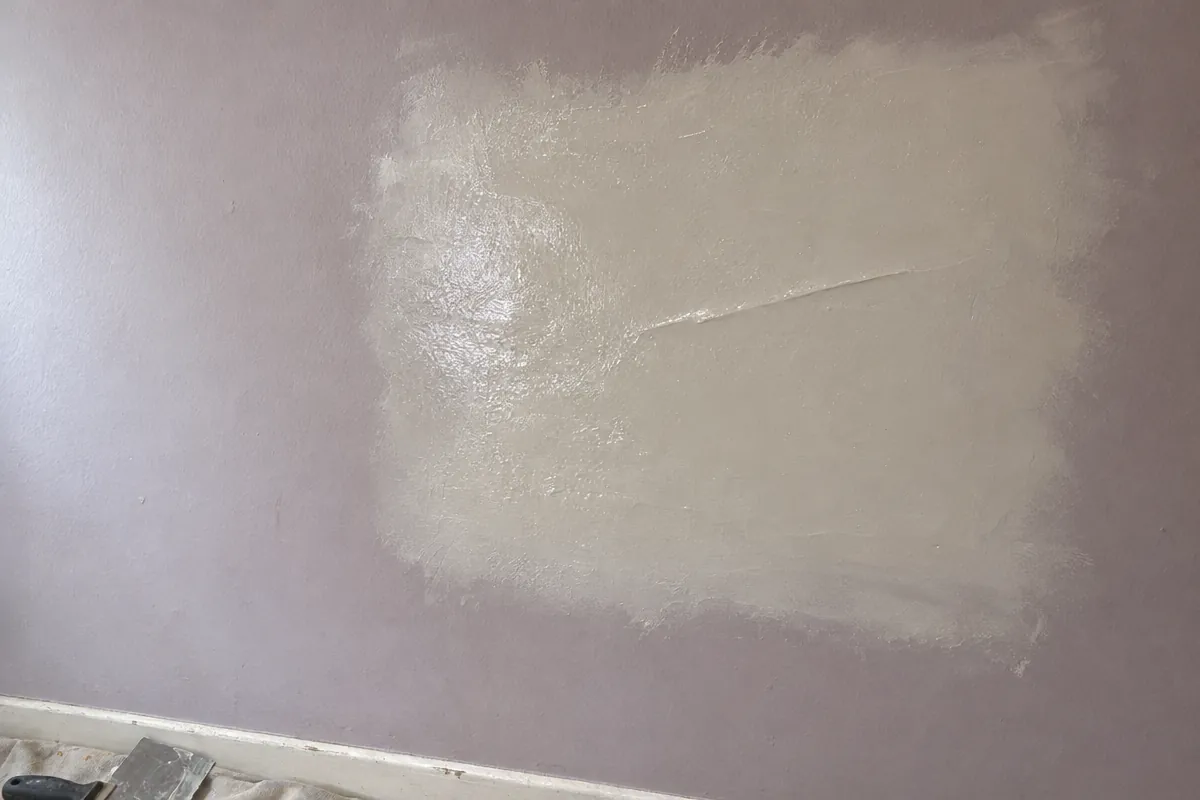
How are the edges feathered so the patch fades out?
Width is the trick. Each coat of mud reaches farther past the patch than the one before, and its outer edge gets pulled whisper-thin with a broad knife until it meets the wall with nothing raised for light to catch. Once sanded, the repair receives primer so it accepts paint like the wall surrounding it. A patch kept only as wide as the hole is the one you notice from the couch.
What about a dented outside corner?
Every outside corner hides a metal or vinyl corner bead under its compound. Hit one hard enough and the bead kinks while the mud around it cracks away, baring the perforated metal. The kinked length is cut out, a new section of bead is fastened in, and the corner is coated, feathered onto both faces and primed. In a busy hallway, a paper-faced bead holds up better.
Why do anchor holes look bigger once the anchor is out?
A plastic anchor that pulls loose tears the paper face around it, and the gypsum behind crumbles into a cone. Filling only the hole you can see leaves a soft spot that dents again under a thumb. The torn paper is trimmed away, the loose gypsum is scraped back until it's solid, and the cavity is packed with setting compound before any finish coat. That's why a wall with ten anchor holes can take about as long as one doorknob patch.
What do published cost guides say a patch runs?
Inch Calculator's national drywall repair guide, last revised in October 2023, lists a small patch job, for instance popped screws or stress cracks, at about $60 to $200 across the country, and says bigger repairs such as holes over six inches begin around $100. Read those as countrywide yardsticks, not as what a Hales Corners wall will cost. The real number depends on how many holes there are, where they sit, the texture, and if paint is wanted.
Is there anything to do before patching starts?
Can I paint the patch myself afterward?
Yes. Plenty of people have the patch primed and roll the finish coat themselves. Hang on to the room's leftover paint so color and sheen line up.
How many holes can go on one quote?
As many as you've got. Putting every hole, dent and pop in the house onto a single quote generally costs less than tackling them one by one.
What about holes from old wiring or a cable run?
Those get patched like any other hole once whatever came out of the wall is capped off or removed. If live wiring is involved, an electrician handles that part first.
Related repairs